I’ll cut right to the chase. I work from home. Pilates keeps me from turning into a pretzel.
Working from home has done wonders for my creativity and overall wellbeing, but not so much for my posture…
I’ve spent the past two and a half years working from my laptop—on the sofa, at the dinner table, curled up like a croissant, or hunched over like an ancient librarian. Every time my partner walks past (mind you, he works at a Pilates studio), he gives me the same look. The “you’re going to regret that posture when you’re older and full of pain” look.
And he is not wrong.
Still, not everyone can afford to go to a Pilates studio several times a week. For one, it’s an expensive form of fitness, and not everyone has access or even, the schedule for it.
But your body still deserves support, especially when you spend hours sitting.
So I decided to bring Pilates into my home office instead. Here’s how I use simple tools to stay aligned, supported, and pain-free—plus some affordable options if you want to try them too.
(Some links below are affiliate links, which means I may earn a small commission at no extra cost to you.)
1. Start With the Chair You Actually Spend Hours In
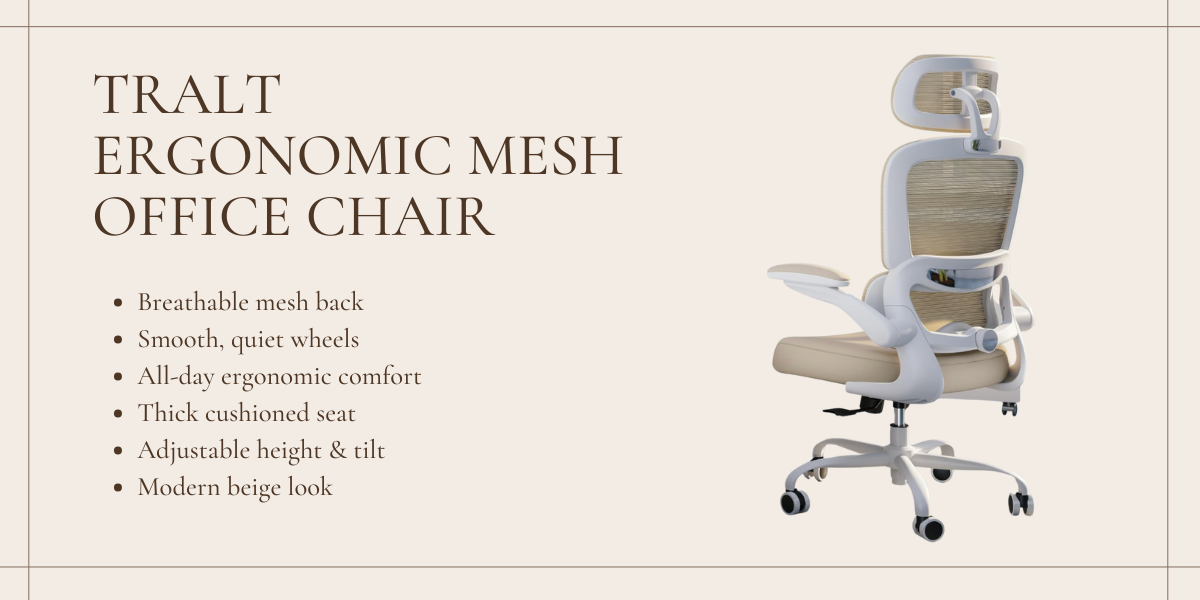
A supportive chair isn’t glamorous, but it’s the foundation. For a while, I regretfully put off buying one because they were so big and bulky. So instead, I used to sit in whatever chair was closest, and by the end of the day my back felt like it was folding inward.
Although they can be a financial investment, they are admittedly one worth making if you work from home and spend many hours sitting.
The money will be worth a longer-functioning back. So finally, I upgraded to an ergonomic option and everything changed.
This chair keeps my spine upright and my ribs stacked over my hips—basically Pilates alignment 101. The high back keeps me from slouching, and the mesh helps me avoid melting into the chair like a sleepy cat.
Pilates tip: Think of “lifting through the crown of your head” while you sit. Not in a stiff position, just gently lengthened.
2. When My Upper Back Gets Tight: The Pilates Arc
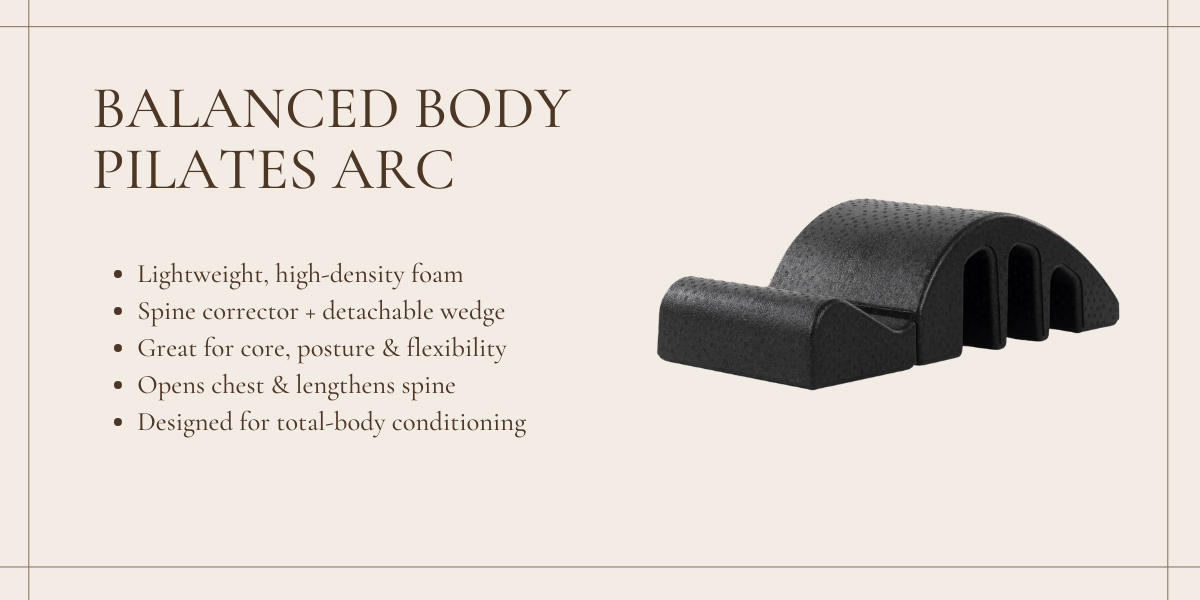
I’ll be honest, I didn’t understand how magical a Pilates Arc could be until I tried one at home. After hours of typing, my chest tightens and my shoulders creep up toward my ears.
Doing a few minutes of extension on this tool feels like rebooting my whole upper back. Yes, it’s a bit of an investment for a wave-shaped piece of foam, but it’s still cheaper than a Pilates subscription at the end of the day.
And the damage it prevents in the long term is also worth considering.
How I use it:
As a Chest & Back Opener
- Lie face down or back on the spine corrector so that your thoracic (upper back) area is supported.
- Open your chest, extend your spine gently, and breathe deeply.
- This is great for improving posture, reducing tension in the shoulders, and increasing spinal flexibility.
For Core Strength & Balance
- Sit or lie on the corrector with your pelvis stabilized.
- Do exercises like leg lifts, seated twists, or crunch variations.
- The curve of the corrector engages your deep core muscles for balance and strength.
For Glute & Hip Activation
- Place your lower back or sacrum on the spine corrector and do bridges or leg lifts.
- This targets the glutes, hamstrings, and hip flexors while maintaining spinal alignment.
- Ideal for toning, strengthening, and improving pelvic stability.
3. A Starter Kit for Anyone Who Wants Everything in One Box
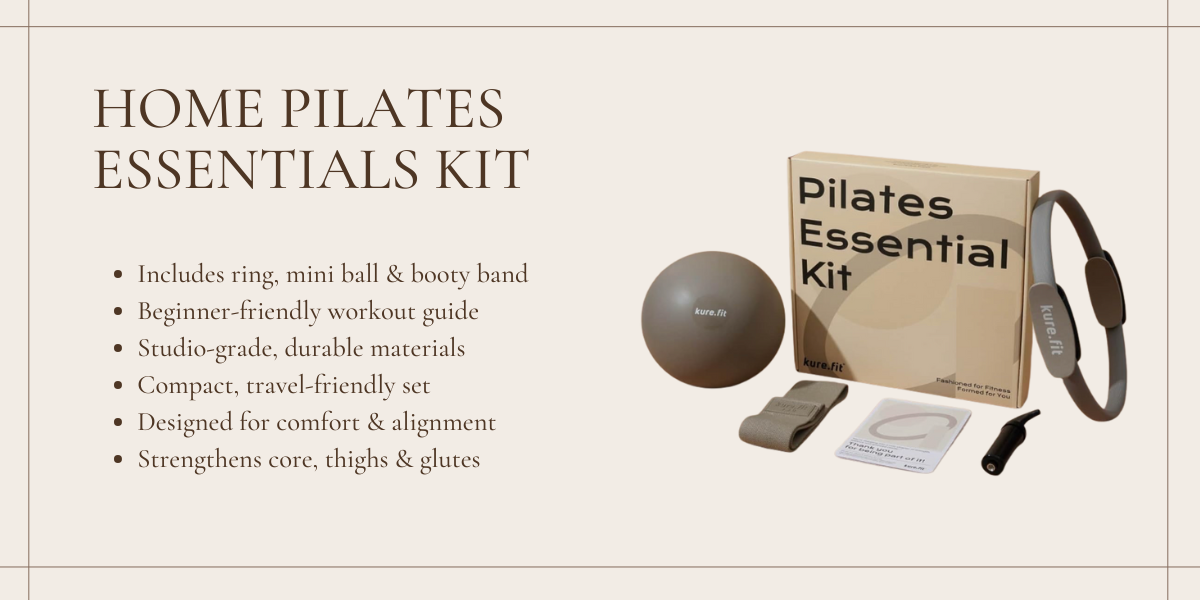
I keep a small Pilates kit at home, and it has quickly become my go-to for quick posture and core resets, especially during work breaks at my desk.
The kit includes a Pilates ring, mini ball, and fabric booty band, and these three simple tools are enough to wake up my muscles without needing to spend a lot of money.
Here’s how I use it:
- Pilates Ring: I squeeze it between my thighs while sitting. It immediately wakes up my core and reminds me to sit taller instead of collapsing into my laptop.
- Mini Ball: I place it behind my back, under my knees, or between my hands for gentle resistance and stretches that open up my chest and engage my muscles.
- Fabric Booty Band: I slip it around my legs while standing or doing small movements by my desk. It wakes up my glutes and lower body without taking up space.
Even just a few minutes here and there makes a difference in how I sit, stand, and move throughout the day.
4. The Exercise Ball For When I’m Feeling Restless
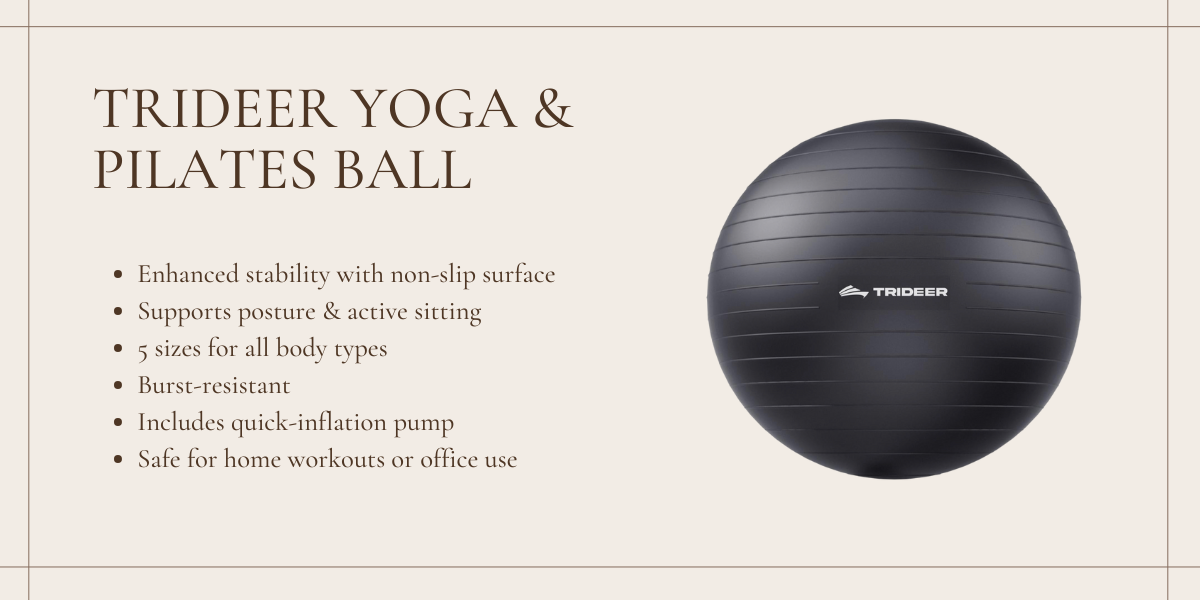
Some days I don’t want to sit still at all. That’s when I swap my chair for an exercise ball.
It’s fun to feel like a 6 year old sometimes, and also, sitting on a ball makes your core engage automatically. You need tiny stabilizing muscles just to stay upright, which prevents slouching accidentally. It’s not a full workout, but the micro-movements keep your spine active.
Plus, again, it’s fun.
5. Wrist & Ankle Weights For Sneaky Strength Work During Breaks
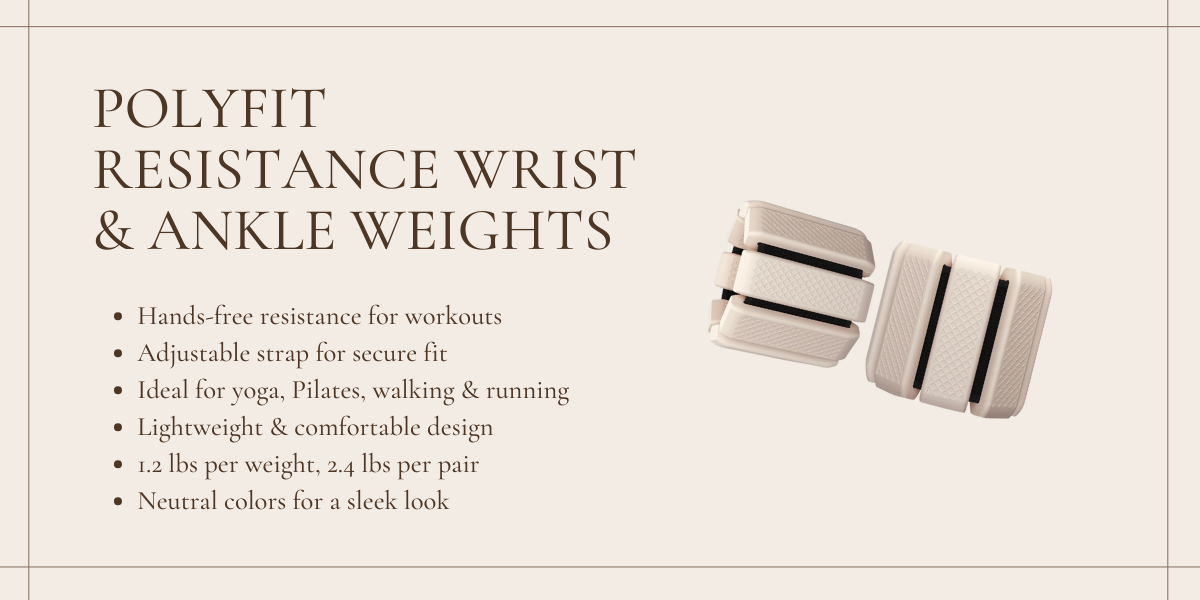
I don’t always have time for a full workout when I’m working, but I do have time to make my breaks count.
If I’m in the mood to push myself a little bit further, I pop these on and do:
- Standing leg lifts
- Gentle arm circles
- Side bends
- A few Pilates-inspired pulses
It’s the perfect reminder to move, and it helps balance out all the hours I spend sitting.
The posture awareness tips I use every day make a big difference for me. These are the things I try to fit into my day:
- Remind myself: ribs down, spine long.
- Keep my feet flat on the floor (I try not crossing my legs into origami shapes for hours on end).
- I set a timer to stand every hour (even if it’s just to stretch my arms overhead).
- I strengthen my core, not just my back.
- I let my shoulder blades slide down, not scrunch up.
Pilates taught me that good posture isn’t rigid, but supportive. It’s a gentle, awake kind of alignment.
Not everyone has access to a Pilates studio, and that’s okay. You can build posture awareness from home with small movements, good habits, and simple tools. And trust me—I’m still learning, still correcting, still catching myself looking like a shrimp or pretzel.
But each day, my body feels a little better and more supported.